Research SCANs.
Key studies on firefighter and EMS health, translated into plain language by members of our Scholars Alliance so you can understand the science and put it to work. Download any SCAN to post at the station or share with your crew.
Fitness & injury
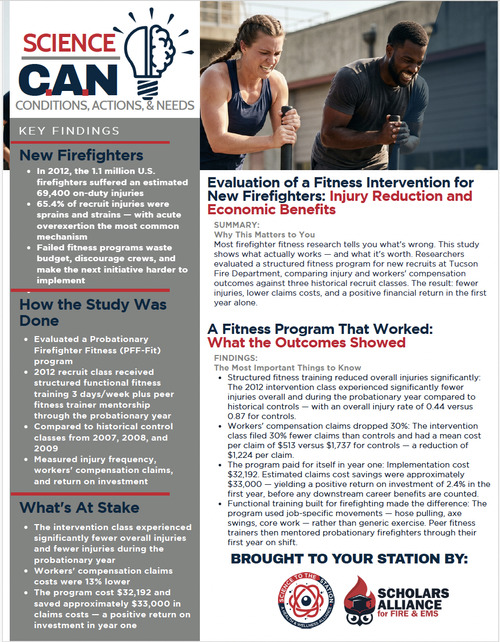
Evaluation of a Fitness Intervention for New Firefighters: Injury Reduction and Economic Benefits
Most firefighter fitness research tells you what's wrong. This study shows what actually works, and what it's worth. Researchers evaluated a structured fitness program for new recruits at Tucson Fire Department, comparing injury and workers' compensation outcomes against three historical recruit classes. The result: fewer injuries, lower claims costs, and a positive financial return in the first year alone.
Sleep
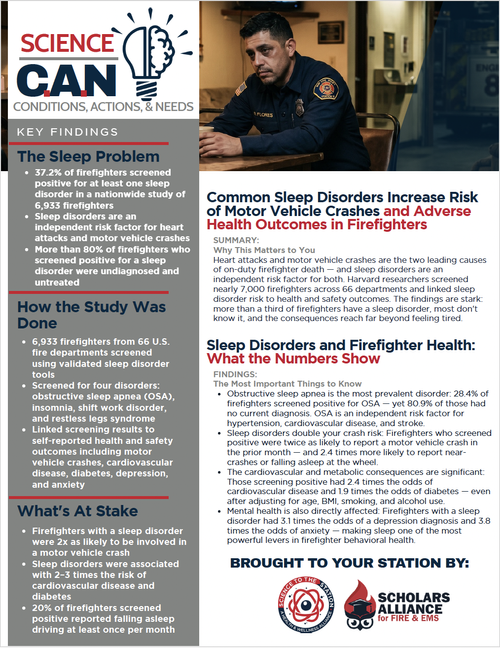
Common Sleep Disorders Increase Risk of Motor Vehicle Crashes and Adverse Health Outcomes in Firefighters
Heart attacks and motor vehicle crashes are the two leading causes of on-duty firefighter death, and sleep disorders are an independent risk factor for both. Harvard researchers screened nearly 7,000 firefighters across 66 departments and linked sleep disorder risk to health and safety outcomes. More than a third screened positive for a sleep disorder, most didn't know it, and the consequences reach far beyond feeling tired.
Fitness
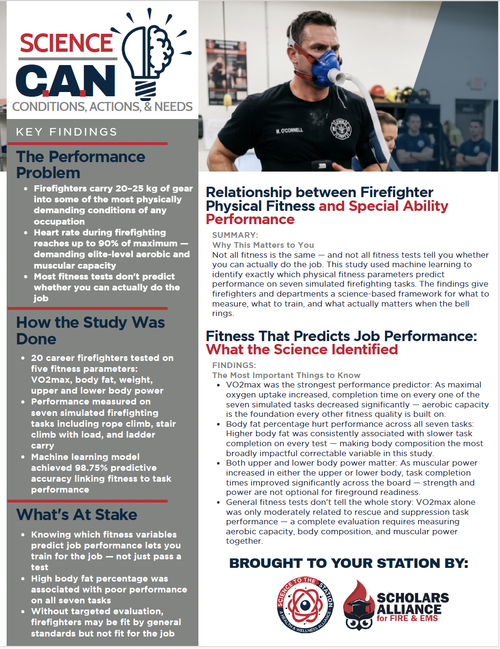
Relationship Between Firefighter Physical Fitness and Special Ability Performance
Not all fitness is the same, and not all fitness tests tell you whether you can do the job. This study used machine learning to identify which physical fitness measures predict performance on seven simulated firefighting tasks. The findings give firefighters and departments a science-based framework for what to measure, what to train, and what matters when the bell rings.
Nutrition & weight
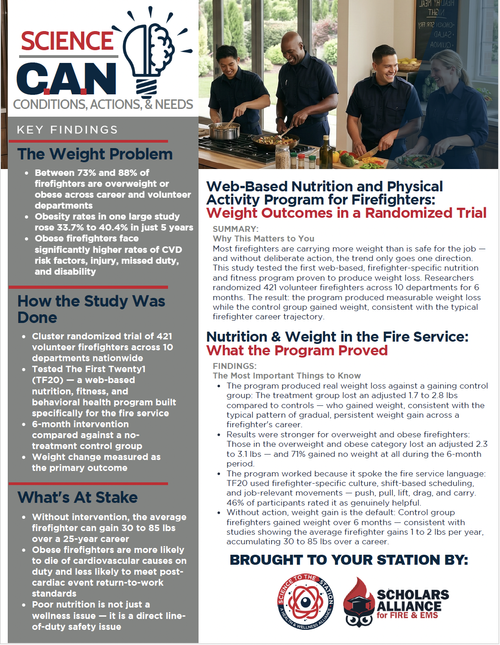
Web-Based Nutrition and Physical Activity Program for Firefighters: Weight Outcomes in a Randomized Trial
Most firefighters carry more weight than is safe for the job, and without deliberate action the trend only goes one direction. This study tested the first web-based, firefighter-specific nutrition and fitness program shown to produce weight loss. Researchers randomized 421 volunteer firefighters across 10 departments for 6 months. The program group lost weight while the control group gained, consistent with the typical firefighter career trajectory.
Injury prevention
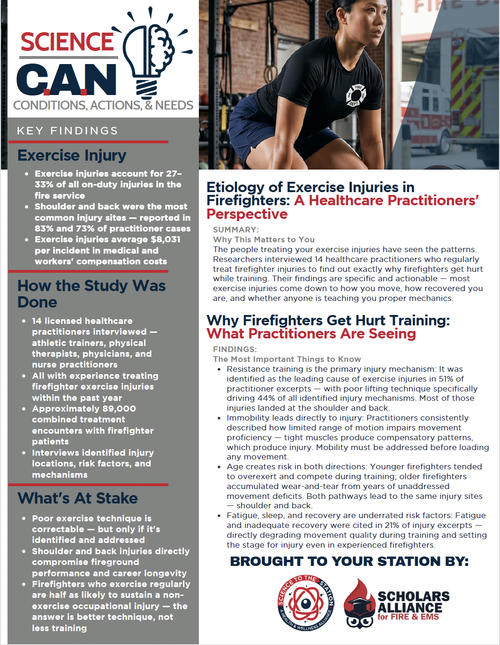
Etiology of Exercise Injuries in Firefighters: A Healthcare Practitioners' Perspective
The people treating your exercise injuries have seen the patterns. Researchers interviewed 14 healthcare practitioners who regularly treat firefighter injuries to find out why firefighters get hurt while training. Their findings are specific and actionable: most exercise injuries come down to how you move, how recovered you are, and whether anyone is teaching you proper mechanics.
Fitness & injury
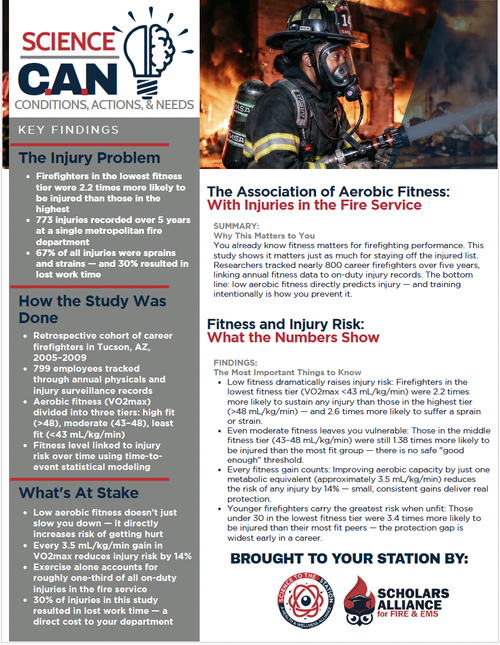
The Association of Aerobic Fitness With Injuries in the Fire Service
You already know fitness matters for firefighting performance. This study shows it matters just as much for staying off the injured list. Researchers tracked nearly 800 career firefighters over five years, linking annual fitness data to on-duty injury records. The bottom line: low aerobic fitness predicts injury, and training intentionally is how you prevent it.
Heart health
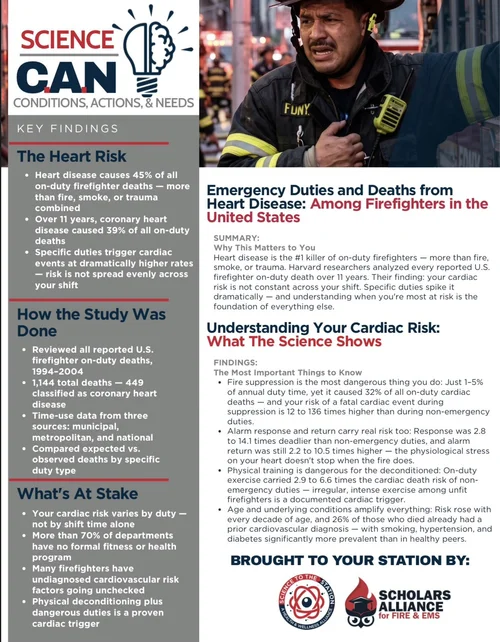
Emergency Duties and Deaths from Heart Disease Among Firefighters in the United States
Heart disease is the leading cause of on-duty firefighter death, ahead of fire, smoke and trauma. Harvard researchers analyzed U.S. on-duty firefighter deaths over 11 years and found that cardiac risk is not constant across a shift. Specific duties raise it sharply, and knowing when you're most at risk is the foundation of everything else.
Leadership
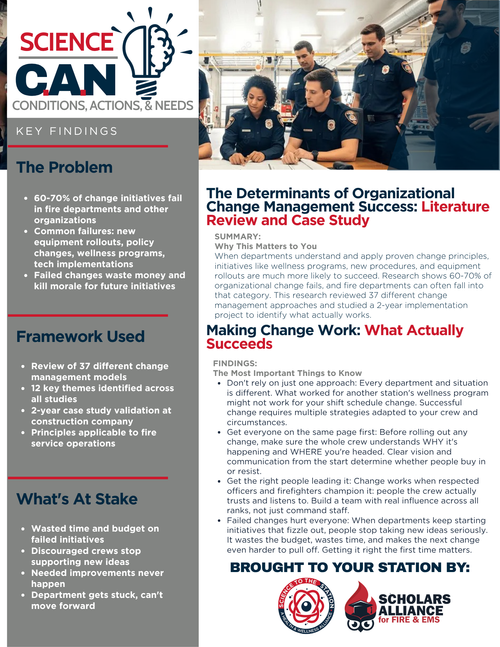
The Determinants of Organizational Change Management Success: Literature and Case Study
When departments understand and apply proven change principles, wellness programs, new procedures and equipment rollouts are much more likely to succeed. Research shows 60 to 70% of organizational change efforts fail, and fire departments can fall into that category. This research reviewed 37 change management approaches and studied a 2-year implementation project to identify what works.
Cancer & exposures
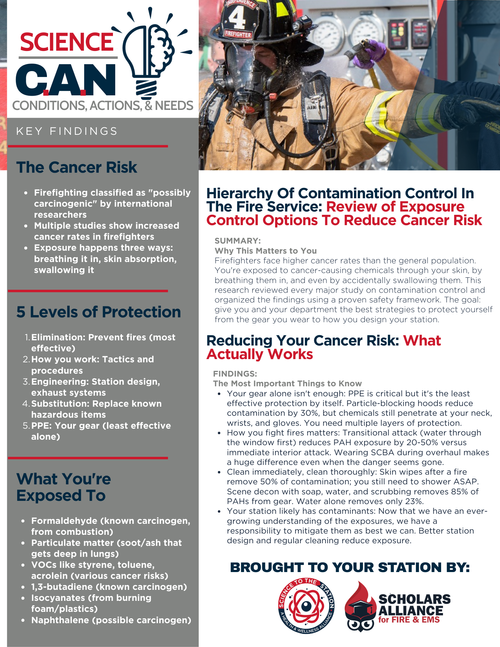
Hierarchy of Contamination Control in the Fire Service: Review of Exposure Control to Reduce Cancer Risk
Firefighters face higher cancer rates than the general population. You're exposed to cancer-causing chemicals through your skin, by breathing them in, and even by accidentally swallowing them. This research reviewed the major studies on contamination control and organized the findings using a proven safety framework, from the gear you wear to how you design your station.