

Resource Center
Your Link to Research Customized for the Fire Service
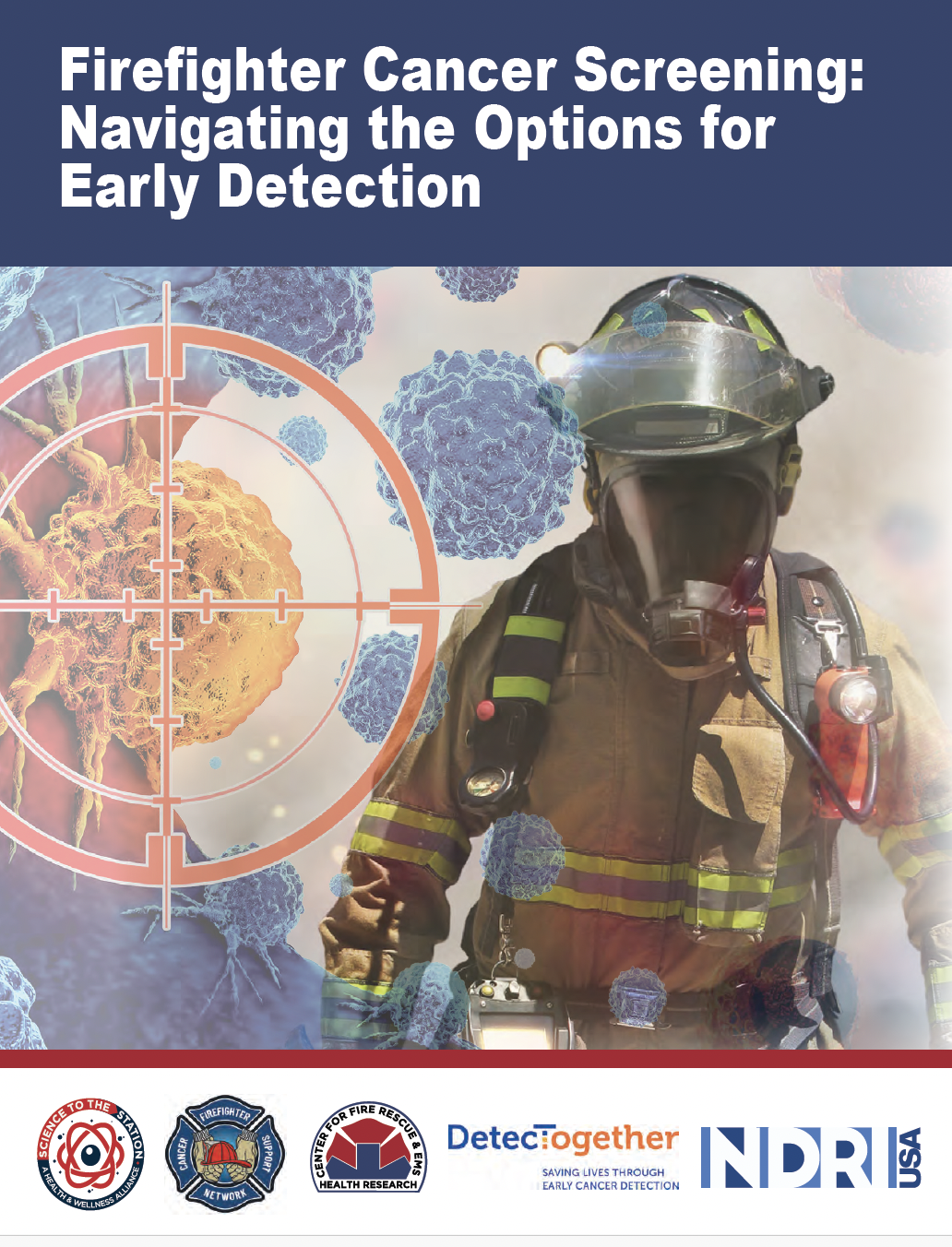
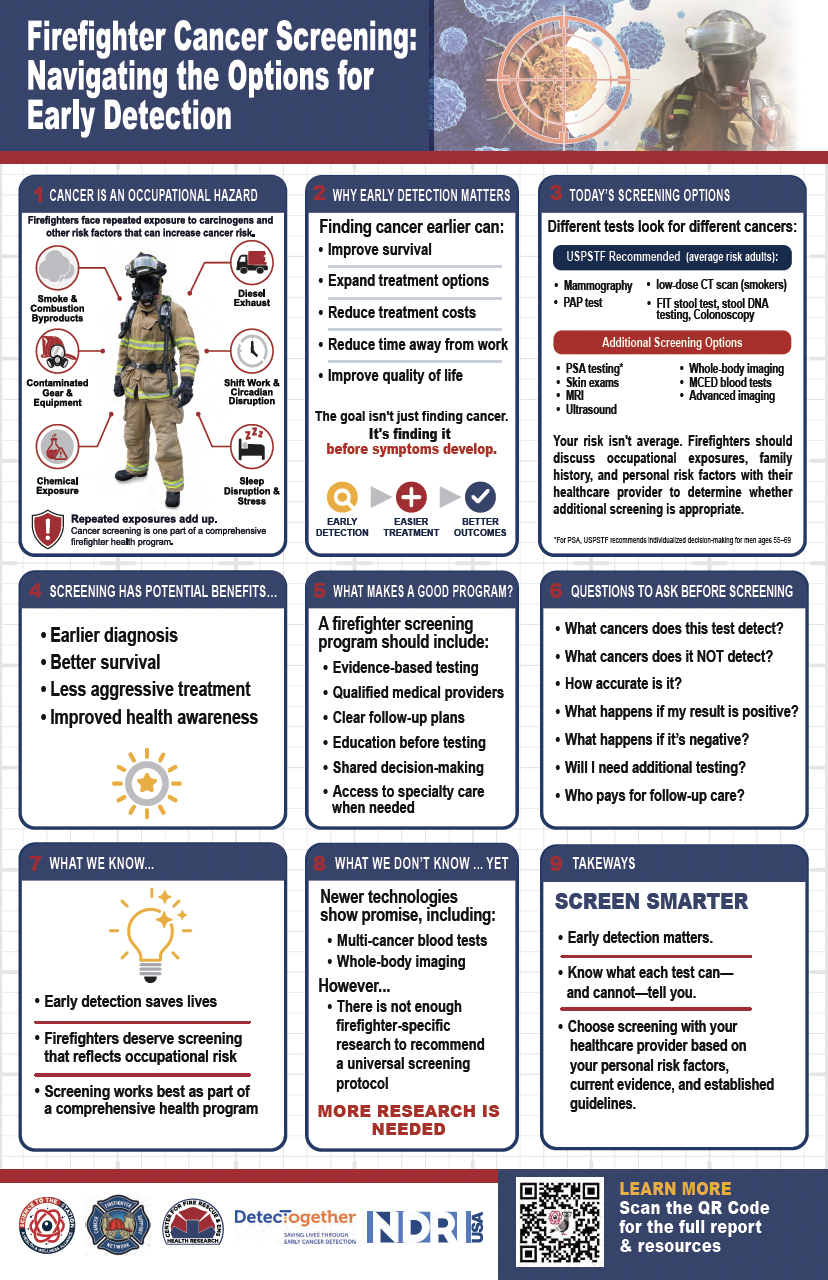
Firefighter Cancer Screening: Navigating the Options for Early Detection
Cancer is now one of the leading health threats facing firefighters. We know early detection saves lives. We know it lowers medical costs, improves treatment outcomes, and opens doors to care sooner. But here's what we didn't have until now: a clear, research-backed guide to screening options built for firefighters.
This resource—authored by our colleagues at NDRI including Brittany Hollerbach—walks firefighters and their health providers through the screening landscape: what the newer technologies like ultrasound, MRI, CT scans, and multi-cancer early detection blood tests can actually detect, what they can't, and what the science currently shows about their accuracy in firefighter populations. It's honest about both the promise and the limitations. False positives happen. Invasive follow-ups can follow. But so do caught cancers that change the course of someone's life.
What makes this resource work is that it doesn't pretend to have all the answers—it acknowledges the gap. There's still not enough firefighter-specific research to create one universal screening protocol. But we included economic context on how early detection may ease the financial burden on departments, practical guidance on building screening programs, and everything a fire chief or health director needs to think through before rolling something out.
Whether you're building a screening program from scratch or evaluating one your department is considering, this is the starting point. Honored to share this work.
NIOSH Training for Nurses on Shift Work and Long Work Hours
(it applies to firefighters & paramedics too!)
-
Collaboration Project: UIS & Reproductive Health
The main goals of this project are translation and dissemination of evidence-based educational content and training. With over one million firefighters nationwide and millions more worldwide, this educational content has the potential to impact a vast majority of the fire service.
-
Provider's Guides for Firefighter Health Resources
Every firefighter needs to take control of their own health care and ensure their providers are aware of the physical and mental health stress common for firefighters. Here you will find tools to help you make informed decisions and guide your physical and mental health care.
-
Cancer Prevention & Early Detection
The Center for Fire, Rescue & EMS Health Research (CFREHR) has partnered with the Firefighter Cancer Support Network (FCSN) and DetecTogether in a groundbreaking cancer prevention initiative, sponsored by the Assistance to Firefighters Grant (AFG) program.
-
Site Specific Cancer Reports
These reports overview risk factors and the current literature that supports a relationship between site specific cancers and firefighting.
-
Fire Camps
Through a partnership with Women and Fire and supported by funding from the Federal Emergency Management Agency Fire Prevention and Safety Grants (FEMA FP&S), we are committed to conducting a novel examination of firefighter camps designed for children and young people across North America.
-
ALCOHOL & the FIRE SERVICE: a research monograph
The purpose of this monograph is to encourage and support those difficult conversations and to provide guidance on what fire departments can do to address alcohol use among its members.
-
Quit Spit Manual
The Quit Spit Manual is a step-by-step guide designed to help smokeless tobacco users quit for good. Developed specifically for firefighters and other first responders, it offers practical strategies to manage cravings, handle triggers, and stay tobacco-free—while recognizing the unique challenges of the fire service culture. The manual includes motivational tools, goal-setting worksheets, and real-life stories to support your quit journey.
-
BETTER HEART
The BETTER HEART (Building Evaluations That Translate Evidence and Research for Heart Evaluations And Related Training) project sought to use the latest medical information, research findings from studies of firefighters, and data from firefighters’ occupational medical exams to develop enhanced, evidence-based guidelines for the detection of cardiovascular disease (CVD) in firefighters.
-
Intro to CBD-THC
Infographic (downloadable) & reference sources
-
Physical Ability Test Consulting
Ensure the health and safety of your fire department by implementing and/or validating a Firefighter Physical Ability Test (FPAT).
-
Women's Stress Resources
By introducing women firefighters to these resources, they can access the support and tools they need to navigate the unique stressors of their profession and maintain their well-being. Additionally, fostering a culture that encourages open dialogue about mental health and supports seeking help is essential for creating a supportive environment for all firefighters.
-
White Paper on Recruitment & Retention in the Florida Fire Service
By: Carlos Aviles, Keith Chapman, Mark Harper, Dr. Lindsay Judah, Harold Theusre
-
Wellness Fitness Initative
This FEMA-funded project's goal was to comprehensively review the current Wellness Fitness Initiative (WFI) and its associated programs and assess the barriers and facilitators to implementing a successful wellness and fitness program in the fire service.
-
PFAS IS DANGEROUS FOR FIREFIGHTERS
This site is designed to help firefighters and their healthcare providers make informed choices about PFAS testing and long-term health protection.